Instant Weather Forecaster Jordan Carruthers Questions Whether An Increase In Tornadoes Across ‘Dixie Alley’ Could Be A Sign Of ‘Tornado Alley’ Shifting East
InstantWeatherWhile we are still digging out from our weekly snow storms in Canada, it looks as though 2019 could mark an active tornado season across the southern United States.
Known as ‘Dixie Alley’, this part of the U.S. stretches across Tennessee, Arkansas and Kentucky, and typically sees more twisters than its counterpart in what is typically known as the classic ‘Tornado Alley.’
Jordan Carruthers, a forecaster for Instant Weather and founder of Manitoba Storm Chasers, made the journey into Dixie Alley this past weekend in the hopes of understanding the nature of the storms in this terrain. This particular journey led him into clocking over 5,000 kilometers (round trip) and positioning himself in Clarksdale, Mississippi, which is approximately an hour drive southwest of Memphis, Tennessee.
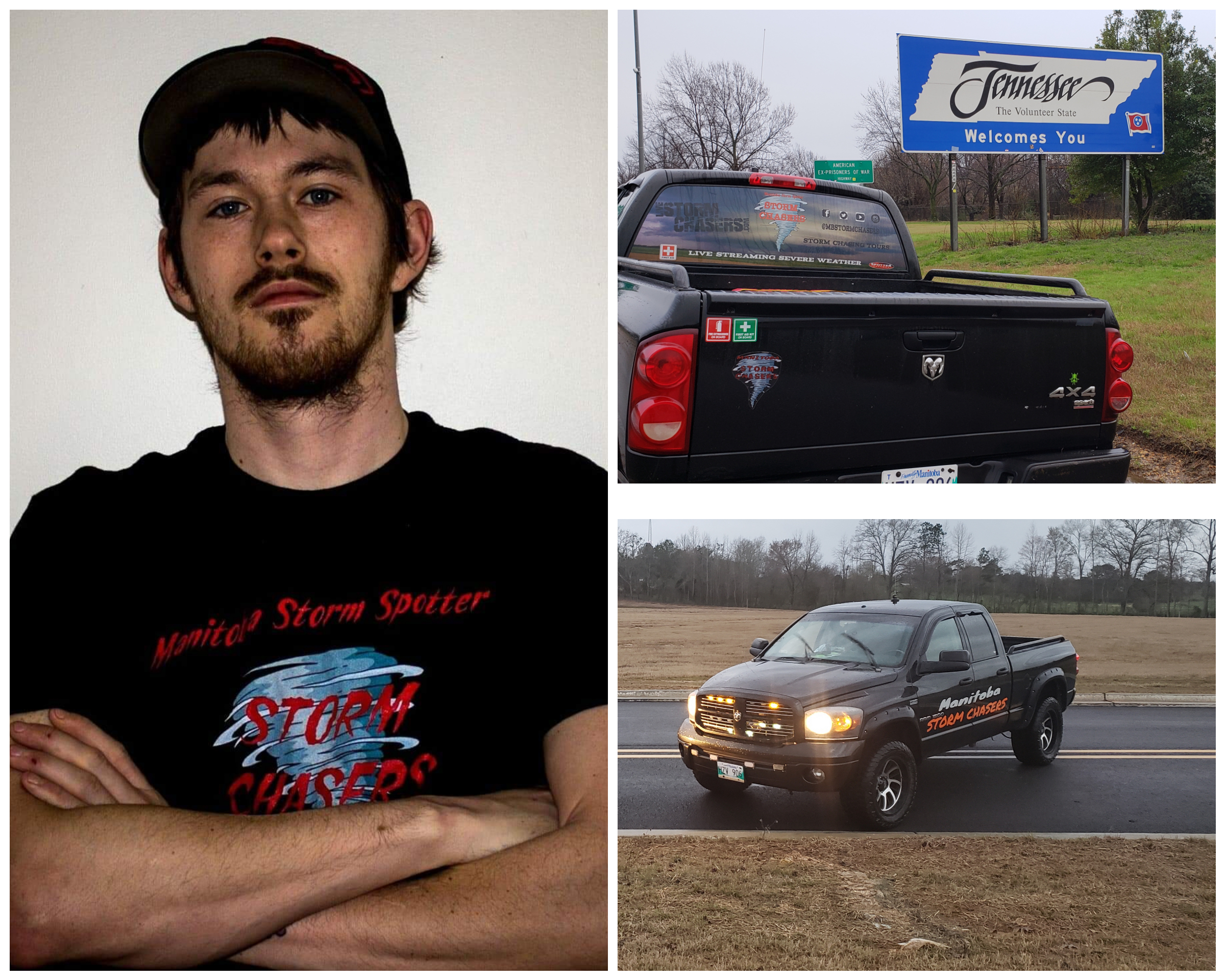
“This system had many dangers associated with it that we wouldn't typically see in the territory of the Great Plains. Dixie Alley is notorious for having terrible visibility due to heavily forested areas, which puts an added risk to citizens. Typically, in these conditions, it is harder to see what is happening under the storm. Then add torrential rain and hail to the mix and you've got a recipe for disaster,” explains Carruthers.
Jordan Carruthers' video tracking the storm

(Source: NOAA - The NOAA issued a ‘Moderate Risk’ for severe thunderstorms on Saturday, February, 23/19)
This past weekend (February 23, 2019) was a perfect example of how conditions were in play for a typical Dixie Alley set up. The National Weather Service (NWS) issued a Moderate Risk to the areas of Western Tennessee and Northern Mississippi, showing a 15% hatched probability of tornadoes, with a high possibility of a stronger than EF2 strength tornado. This particular system was potent in that it was a very fast moving system associated with a very deep low that actually reached Category 1 Hurricane pressure levels.
In the case of this system, these storms were moving at a hectic pace that could likely catch many people off guard.
Carruthers adds, “One of the main reasons why this system was so dangerous was due to the fact that it was moving at an extremely quick pace, clocking close to 70 mph at times, making this an extremely critical situation.”
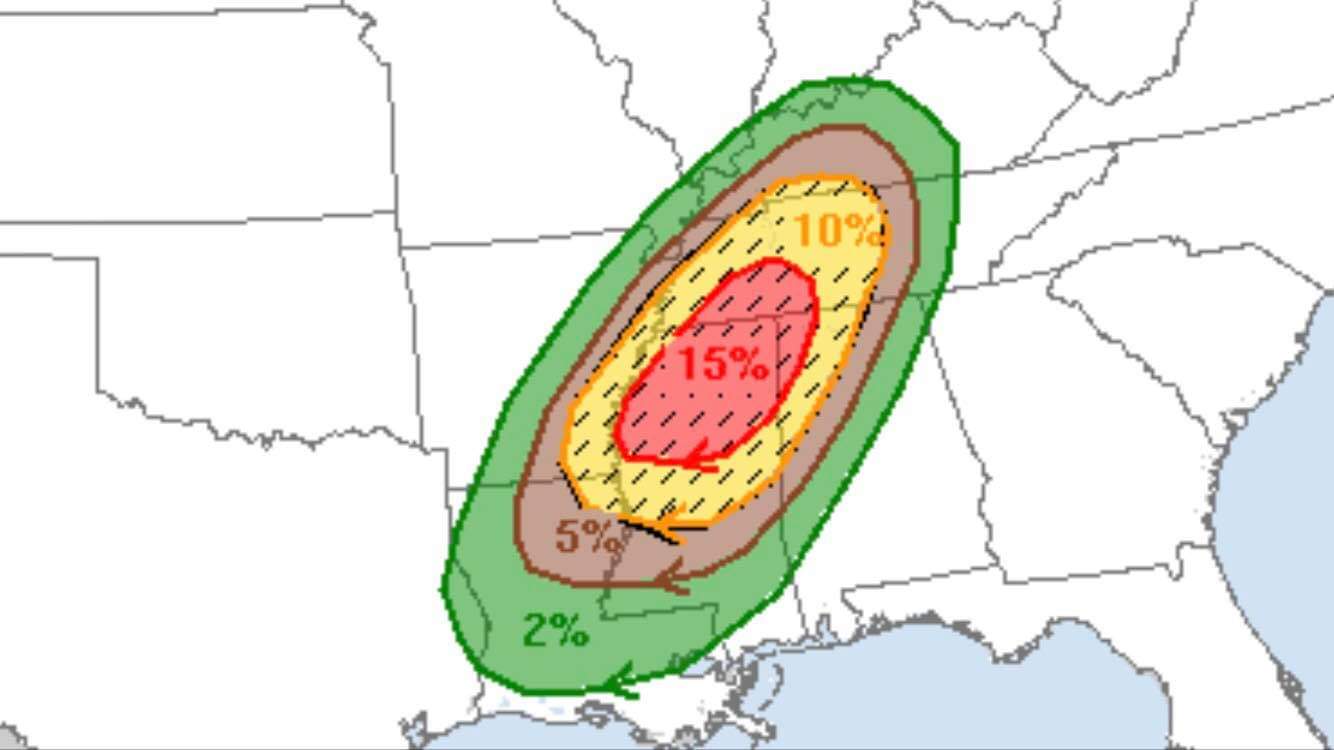
(Source: NOAA - The NOAA issued a ‘15% hatched Risk’ for Tornado probability on Saturday, February, 23/19)
According to Bloomberg, Dixie Alley’s location is perfect for the formation of winter tornadoes due to the tendency of an upper-level trough in the west, ridging in the east and an upper-level jet streak in between, across the Great Plains. But what is even more concerning is the trend over the past twenty years indicating that 28% of all Dixie Alley tornadoes take place in the nocturnal hours between 9 p.m. and 7 a.m., which leaves people very little time to find proper shelter.
Of all the areas, Tennessee, Arkansas and Kentucky experience the greatest number of nocturnal tornadoes for the region.
A further study from the University of Northern Illinois suggests five critical factors make Dixie Alley the most deadly: the higher than normal mobile and manufactured homes in the area, storms producing tornadoes at night which leave very little warning time for citizens, trees acting as projectiles during strong winds along with visibility issues, the earlier storm season (typically strongest in November and December) and complacency often caused by people caught off guard, unaware these storms can spawn tornadoes quickly.
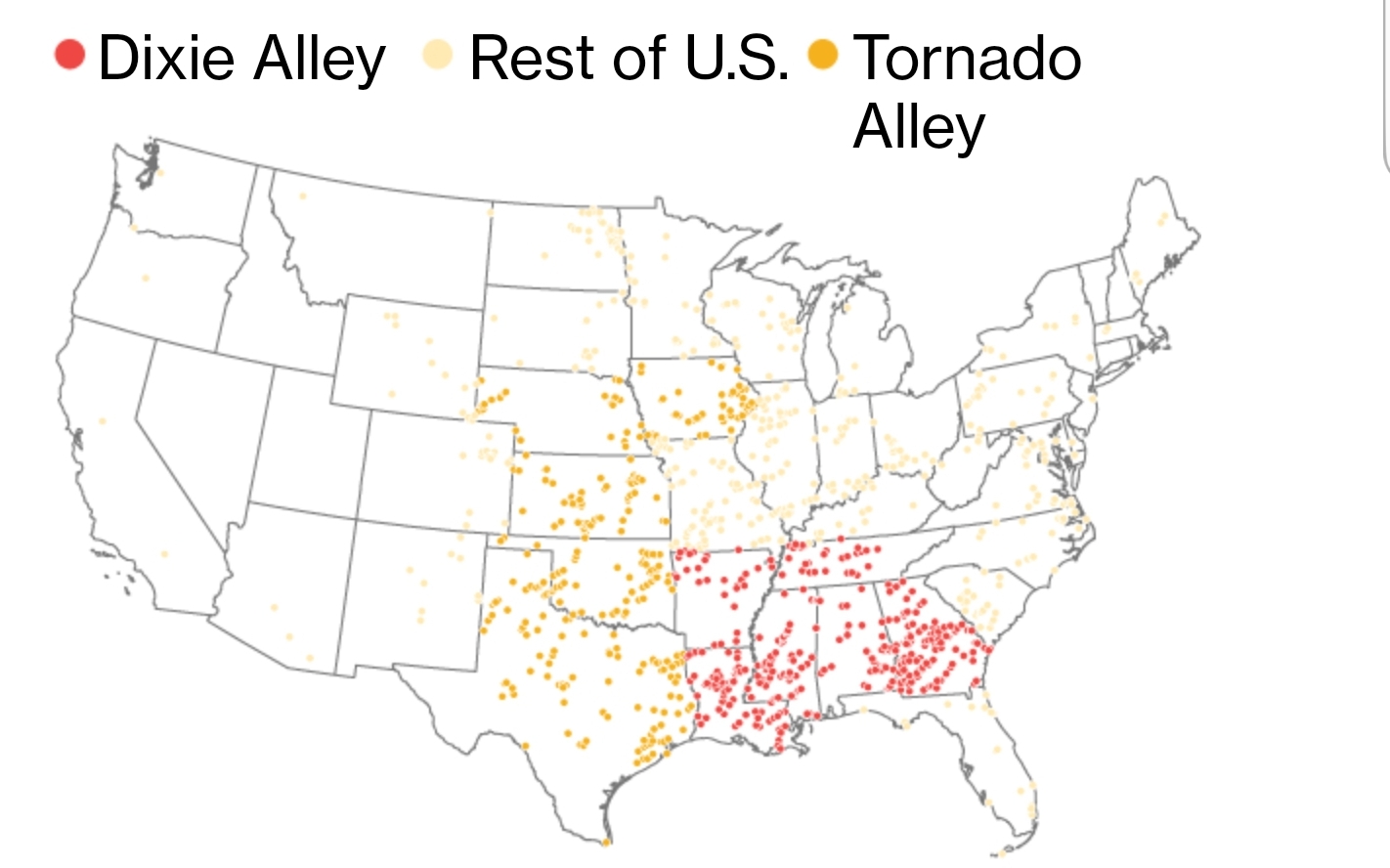
(Source: Bloomberg https://bloom.bg/2x9EOg2 This graphic provides a visual of tornadoes tracked in 2017 where through Aug. 13, 365 tornadoes have been reported in Dixie Alley compared with Tornado Alley's 328)
A 2016 study published in the Journal of Applied Meteorology and Climatology led by Ernest Agee identified (within a 30 year period from 1954-83 and 1984-2013) a sharp decrease in summer tornado activity in the traditional alley as opposed to a jump in activity in autumn for western Tennessee and Mississippi. The study also identified a drop in winter and spring tornado counts over the Southern Plains, but a rise across the South.
In the case of Carruthers, he leaves nothing to chance, “Thankfully with our knowledge and understanding of weather, our ability to read and understand radar and the great road networks, this provided us with the ability to remain safe and out of harm's way while tracking this system.”
Suzanne P. & Jordan C.
P.S. Word of caution: Storm chasing is incredibly dangerous and should be left up to the professionals. Don’t try this at home folks!
References
https://www.usatoday.com/story/weather/2016/02/28/tornado-research-vortex-southeast/80926262/
https://www.ncdc.noaa.gov/climate-information/extreme-events/us-tornado-climatology/tornado-alley
https://www.livescience.com/30265-dixie-alley-tornado-alley110323.html