DAYLIGHT SAVING TIME DETAILS & VIDEO: Tips, History, & Answers To Your Questions!
InstantWeatherOur sister page, Instant Weather Ontario has created a video regarding Daylight Saving Time. Written details & photos are further down the page:
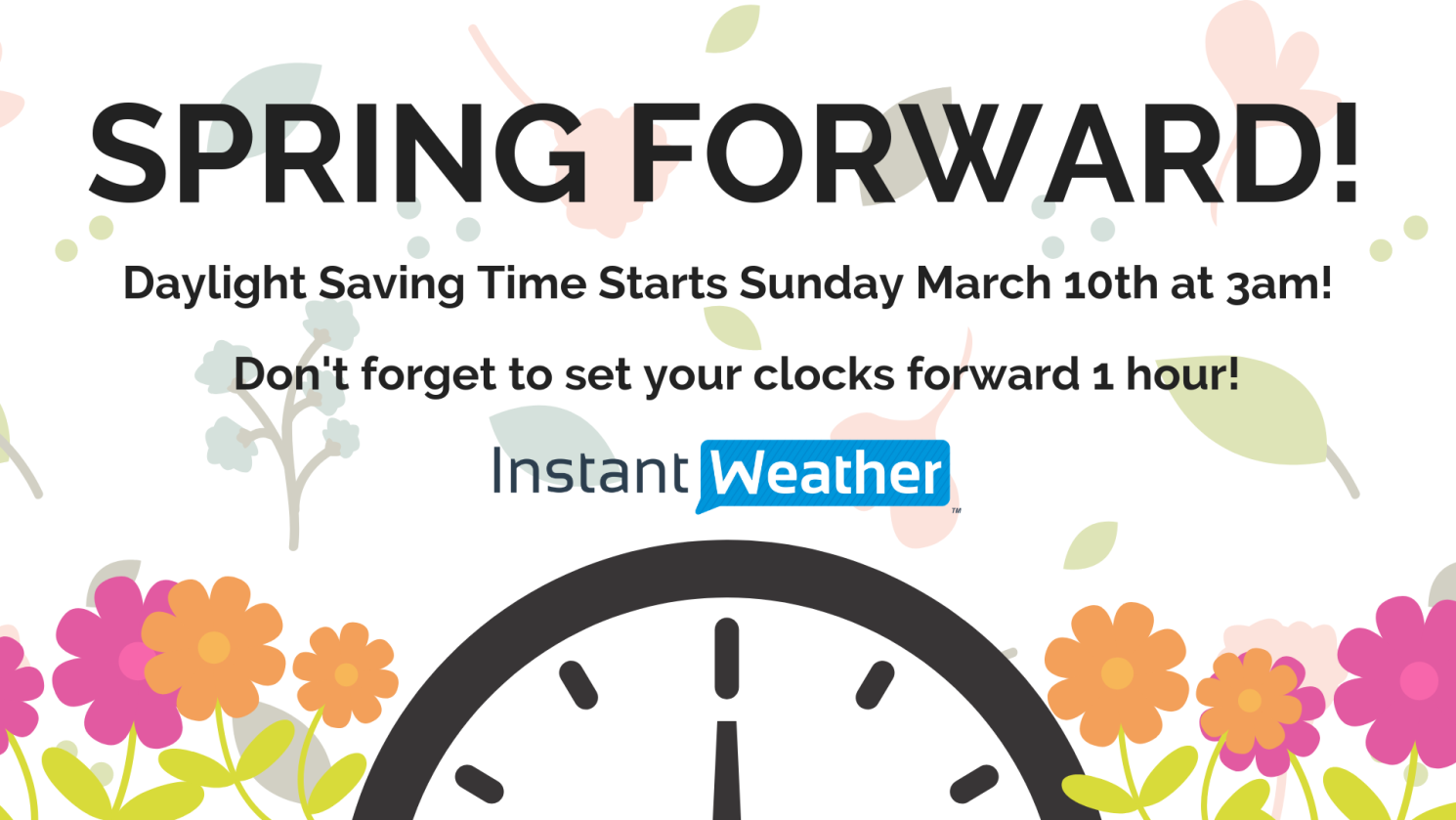
Here's what Jennifer said in the video:
"Hi, I'm Jennifer Fergusson for Instant Weather Ontario. On today's video, we're going to talk about Daylight Saving Time. What is it? Why do we observe it? And, does everyone observe it? I'll have the answers to those questions and more, coming up.
So, in the spring, we say spring-ahead or using Daylight Saving Time. Some people add an 's' and say Saving's time but there's no 's'. It's actually Daylight Saving Time. And what that means is that the sunrise and the sunset will happen one hour later than it did the day before. In the fall we say fall-back or going back to Standard Time. And I found a really funny comic that'll help us understand falling back:
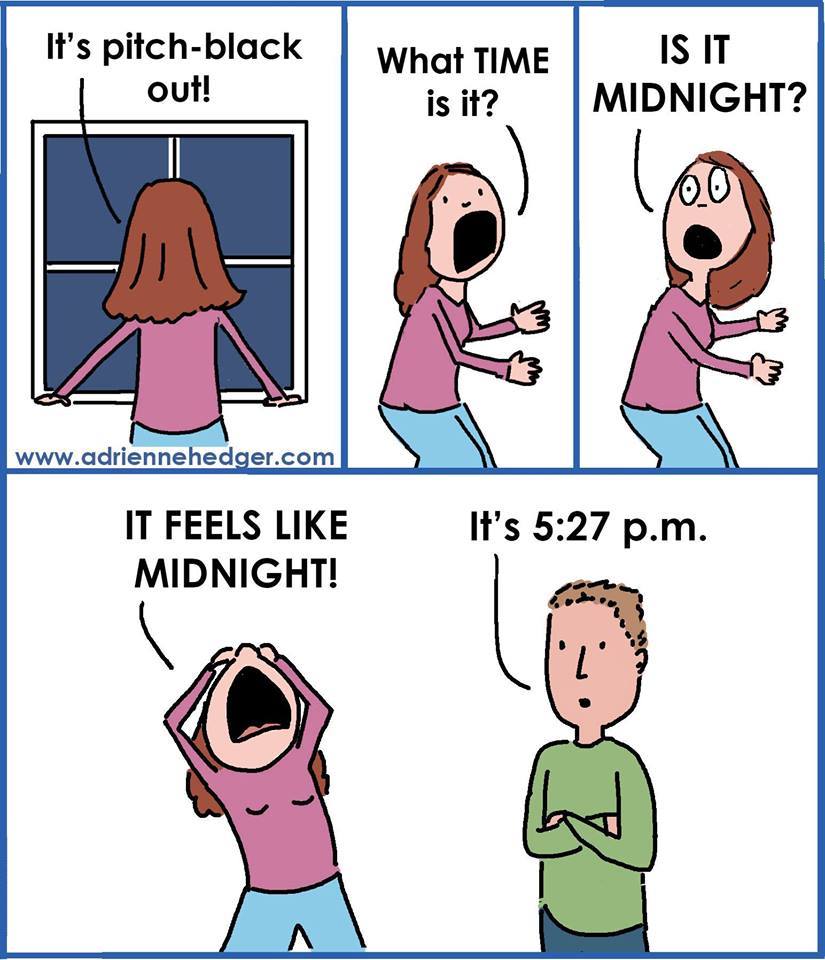
(Image above courtesy of https://www.adriennehedger.com )
Isn't that perfect? I mean, we go to work in the dark, we come home in the dark, for most of us. Basically means it's going to get darker an hour sooner and stay darker longer. Daylight Saving Time begins on the second Sunday in March and ends on the first Sunday in November each year. And Canada & the US observe the same start and end dates to keep things simple.
Now, it's mainly reported that Germany and Austria were the first to observe Daylight Saving Time in 1916 but they were actually beaten by a number of years and a few hundred people who turned their clocks on July the 1st, 1908 in Port Arthur, which is now; Thunder Bay, Ontario. It didn't catch on globally though until Germany and Austria used it two years into World War One. They wanted to save the fuel that was being used for artificial lighting and used it for the war effort instead. And so, longer hours of daylight really helped with that and soon, other countries followed suit like the UK and France. They did return to Standard Time right after World War One, and didn't go back to Daylight Saving Time until World War Two. In fact, I remember my Grandmother saying that Daylight Saving Time really helped on the farm because there weren't as many men around during the war to do the work and so, that extra hour of daylight helped them to get all the work done.
Now, 40% of countries worldwide use Daylight Saving Time in order to make better use of the daylight and to conserve energy. In Canada, it's up to each municipality to decide whether or not they want to use Daylight Saving Time. In fact, most of Saskatchewan, some parts of northern Quebec, and parts of British Columbia stay on Standard Time all year long.
There are many pros and cons to Daylight Saving Time but the major con is the negative impact that it has on our bodies. It has been associated with depression, heart attack, and even miscarriage but the most common side effect is tiredness. Tiredness has been reported to increase the traffic incidents and workplace injuries on the Monday following the switch over to Daylight Saving Time.
So, for an easier transition, I have a few tips for you. First of all, set your alarm on the Friday and Saturday before the switch to wake you up a little bit earlier to get used to it. Second of all, on the Sunday of the switch, wake up early, have a nice healthy breakfast because food tells your body it's time to wake up. And lastly, go for a walk outside. I mean, it's beautiful out here but you'll also get the benefit of the sunlight, which resets your body's clock. Finally, I feel really bad for anyone with small children. I have felt the pain for many years and it is not an easy transition for them. I have another thing to show you that I think you'll find funny:
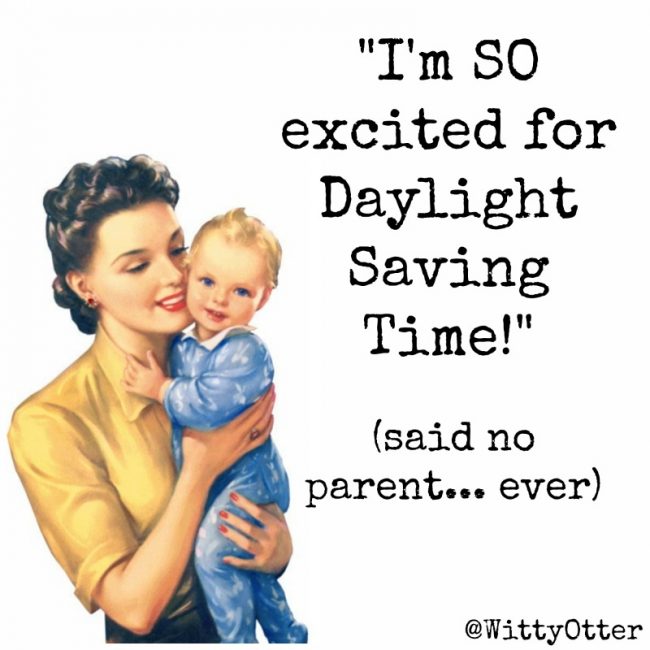
(Image above courtesy of @WittyOtter on Twitter )
Isn't that right?! So to help your small children with the transition, try sending them to bed a little early for the week leading up before the switch.
If you liked this video and found it helpful, please give it a thumbs up. If you haven't done so already, subscribe to our YouTube channel (https://YouTube.com/InstantWeatherOntario) If you click the bell, you'll get a notification the next time we have a video update. You can also stay up to date by following us on Facebook, Instagram or on Twitter.
Another way to stay up-to-date is through our instant Text Message Alerts. You get them straight to your phone, that's Environment Canada's alerts as well as our own custom updates with information during severe weather. You can do that one of two ways, by visiting our website at https://InstantWeather.ca or through our Patreon campaign https://Patreon.com/InstantWeather , where you can get cool things like hats, t-shirts, and coffee mugs.
I hope this video will help you with your transition the next time we change those clocks. For Instant Weather Ontario, I'm Jennifer Fergusson."
- Jennifer Fergusson, Adam Skinner, & Jake Cuthbert