Summer! It's here! Jennifer explains why in today's video & written update.
InstantWeatherHere is Jennifer's video about the summer solstice:
"Hi, I'm Jennifer Fergusson for Instant Weather. Well, spring equinox has past and summer solstice is upon us. Have you ever wondered what the difference between an equinox and s solstice is? I'll have all that information for you in today's video.
Well, the summer solstice is upon us and that marks the calendar each year for the beginning of summer on June the 20th, 21st or the 22nd. That's according to the astrological calendar. Now, the meteorological calendar is a little bit different, it's divided differently, and summer is actually June, July, and August. So, according to the meteorological calendar, we've already been in summer about three weeks by the time summer solstice arrives.
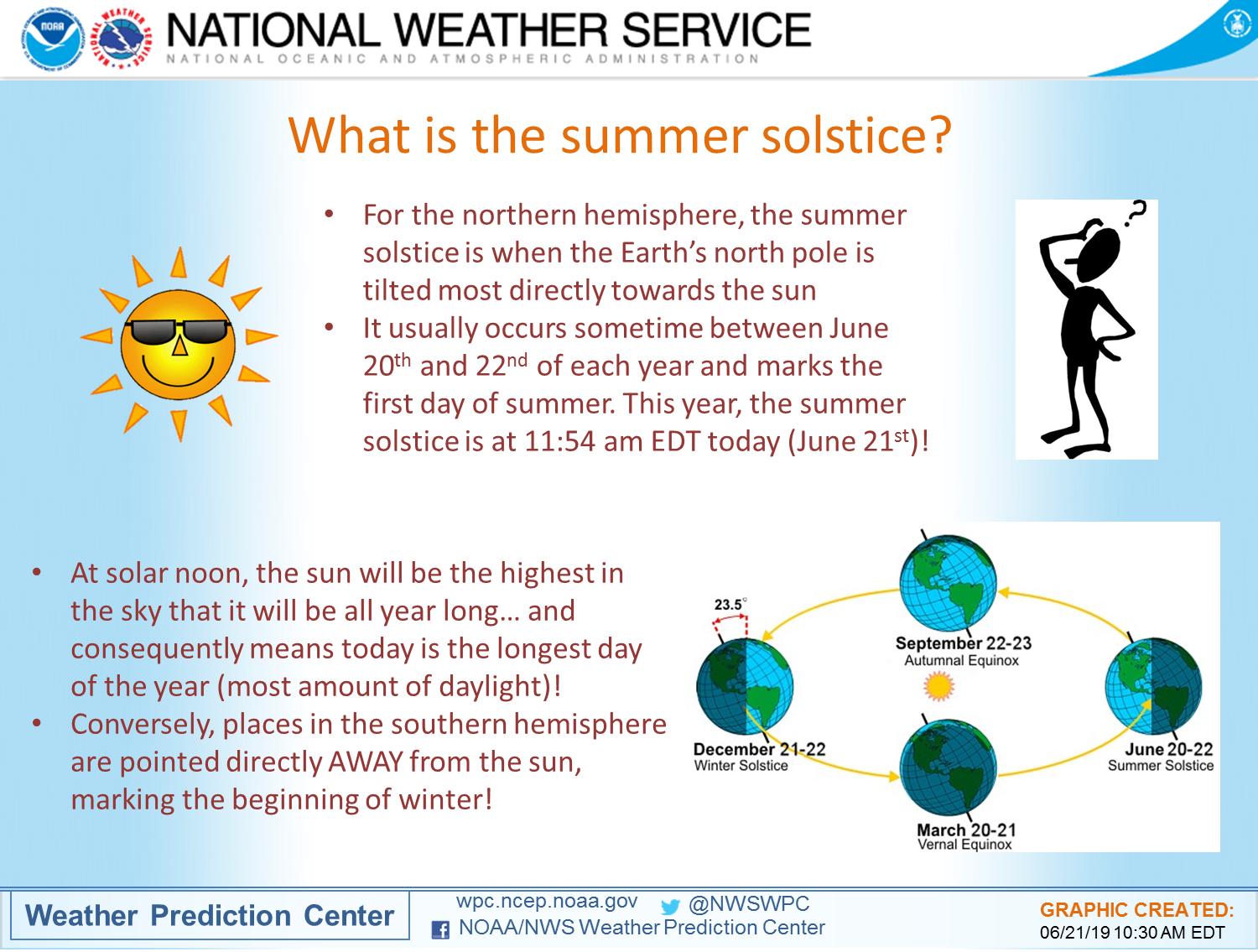
Summer solstice is the longest day of the year. It's the day when we get the most sunlight, we get the shortest night, and we also have the longest twilight. So, about an hour, to an hour and a half extra after sunset. So, here's how it works; the earth orbits around the sun on a tilted axis and each hemisphere is tilted towards the sun for half the year and away from the sun for the other half of the year. Now, between March and September, that's when the northern hemisphere is tilted towards the sun and we're getting the most direct radiation. And this is also the cause for our seasons. When the northern hemisphere is tilted towards the sun, we're getting that direct radiation, the warm temperatures, and we're getting our summer. But when we're tilted away from the sun, the southern hemisphere is getting the direct radiation, the warm temperatures, they're getting their summer, and we're getting our winter.
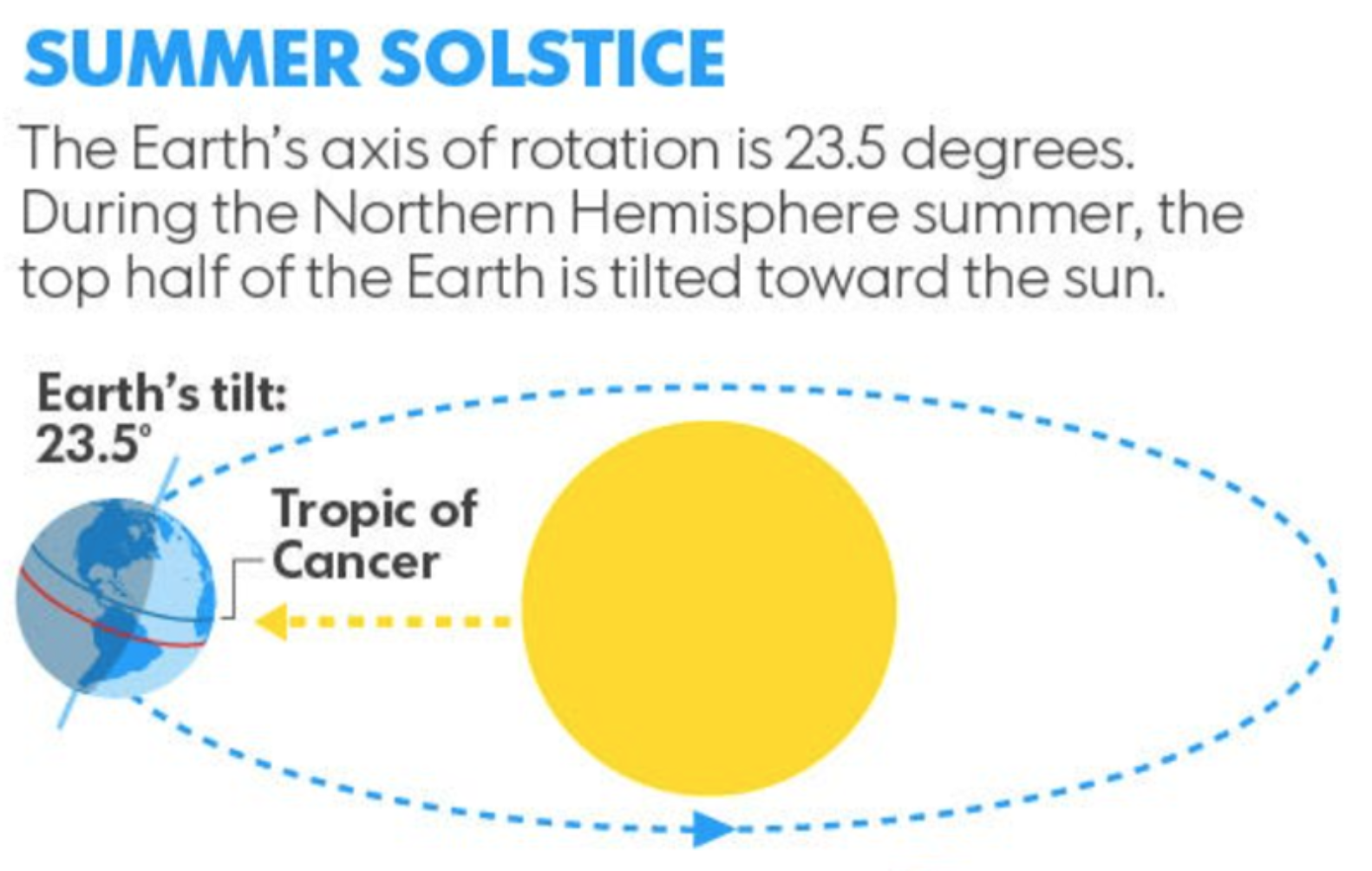
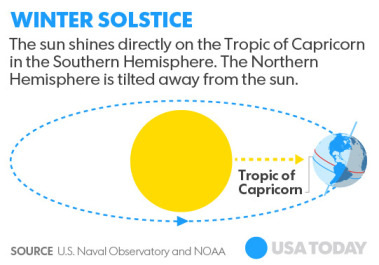
So, what's the difference between a solstice and an equinox? Well, during a solstice, the sun is at its greatest distance from the equator. When the northern hemisphere is tilted towards the sun, the sun is radiating at the Tropic of Cancer. And when the northern hemisphere is tilted away, the sun is radiating at the Tropic of Capricorn and not at the equator. That is a solstice, winter and summer solstice.
But when the sun is radiating directly at the equator, it's at its closest distance to the equator, this is called an equinox. We get our equinox in the spring and in the fall.
So, whether you follow the astrological calendar or the meteorological calendar or even the school year calendar, summer is definitely upon us. And I hope you have lots of great things planned this summer to really enjoy all that this great season has to offer. Because you know, fall is right around the corner and the fall equinox will be on September the 23rd.
If you liked this video and found it informative, give it a thumbs up. For Instant Weather, I am Jennifer Fergusson."
If you're interested in connecting your organization with our amazing community by sponsoring a video or a forecast, please connect with us by filling out our contact form at https://InstantWeatherInc.com/contact
Video created & filmed by Jennifer Fergusson. Edited by Adam Skinner